
How Traveling Brain Waves Shape Attention and Perception
For decades, classical neuroscience treated brain activity like localized lightbulbs turning on and off in isolation.
Anúncios
Modern electrophysiology reveals a much more fluid reality: signals move across the cerebral cortex in continuous, directional patterns.
Understanding how traveling brain waves shape attention and perception changes our fundamental view of human cognition, transforming static neural maps into dynamic sensory highways.
These spatiotemporal oscillations sweep across cortical tissue like ripples on a pond.
Rather than staying stationary, peak electrical voltages propagate across centimeters of neural space every few milliseconds.
This spatial movement creates a moving coordinate system that aligns visual inputs, auditory cues, and conscious decision-making in real time.
Key Takeaways
- Dynamic Scaffolding: Traveling brain waves act as physical conveyors that organize timing, attention, and sensory perception across cortical regions.
- Phase-Locking Advantage: Neural oscillations coordinate millisecond-level windowing, allowing the brain to filter background noise and prioritize critical sensory data.
- Clinical Frontiers: Mapping these directional waves reveals early biomarkers for cognitive decline, ADHD, and motor visual impairments.
What Are Traveling Brain Waves and How Do They Move?
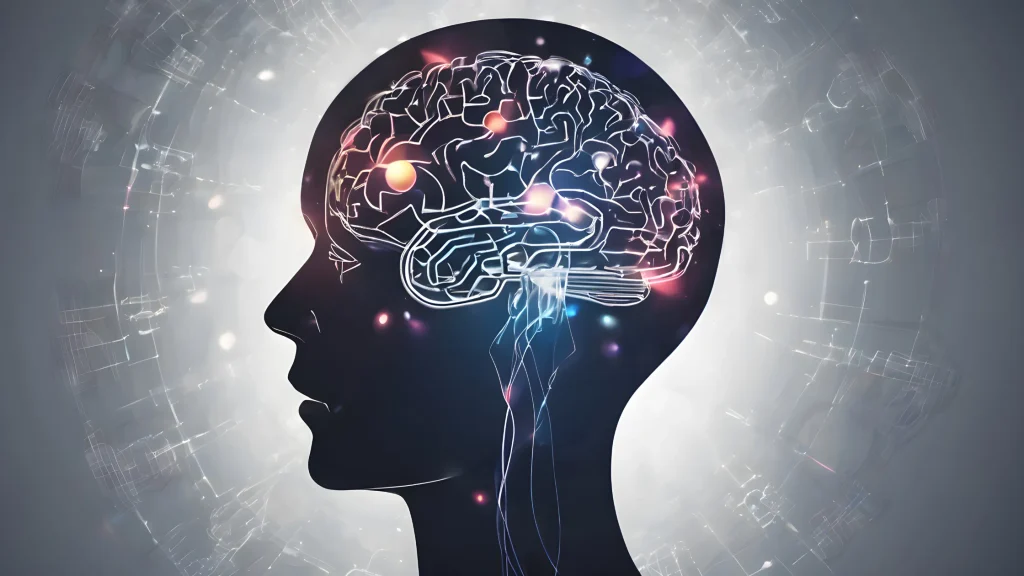
Traveling brain waves are spatial oscillations of local field potentials that move predictably across neural tissue.
Unlike stationary standing waves that fluctuate in place, these propagating signals transport contextual information from one anatomical region to another.
Researchers monitoring cortical activity observe these patterns across multiple frequency bands, particularly theta (4–8 Hz) and alpha (8–12 Hz) rhythms.
Frontal areas regularly generate forward-moving waves to initiate executive action, while sensory visual areas route backward-moving signals toward cognitive hubs.
This directional movement ensures distinct brain regions do not fire simultaneously in chaos. Instead, local population responses fire in a precise sequential cadence, preserving temporal order.
How Do Traveling Waves Coordinate Visual Perception and Focus?
Visual processing demands rapid prioritization because environmental inputs overwhelm human working memory.
Propagating spatial waves rhythmically modulate neuronal excitability across primary sensory zones.
When a wave crest passes over a specific cortical area, local neurons reach a higher sensitivity threshold.
++ Why Cortical Magnification Shapes Human Perception
Incoming sensory information arriving precisely at this crest receives immediate processing priority. Troughs produce brief inhibitory moments, filtering out environmental clutter.
| Oscillation Type | Directional Axis | Primary Function | Behavioral Impact |
| Alpha Traveling Waves | Occipital $\rightarrow$ Frontal | Bottom-up sensory sweep | Rapid detection of unexpected movement |
| Theta Traveling Waves | Frontal $\rightarrow$ Hippocampal | Top-down executive search | Goal-directed visual scanning |
| Beta/Gamma Waves | Intra-cortical networks | Local feature integration | Detailed object and face recognition |
By scanning continuously across visual space multiple times per second, these oscillations construct our seamless perception of continuous reality from rapid discrete neural snapshots.
Why Is Phase-Locking Essential for Information Processing?
Sensory integration requires far more than local signal strength; spatial timing dictates accurate cognitive perception.
Neurons situated along the wave’s path synchronize their firing phases—a mechanism known as phase-locking.
Phase alignment allows distant cortical structures to share dynamic communication channels.
When the phase of a propagating wave in the parietal lobe aligns with an incoming frontal signal, data transfers with minimal latency and maximal signal fidelity.
Comprehensive research documented by the National Institutes of Healthdemonstrates that disrupters of local electrical field propagation immediately impair conscious perceptual binding.
Without coordinated wave timing, target recognition degrades into fragmented sensory feedback.
Top-down focus leverages this timing architecture directly. When concentrating on a task, prefrontal circuits send directional theta waves backward to sensory regions, priming relevant cortical zones before visual stimuli even hit the retina.
++ Why Mismatch Negativity Reveals Hidden Brain Activity
How Do Disruptions in Propagation Signal Neurological Disorders?
Because spatial wave movement coordinates large-scale communication, subtle changes in direction or velocity serve as delicate biological indicators.
Irregular wave propagation correlates directly with distinct cognitive impairments.
Neurodegenerative conditions like Alzheimer’s disease display reduced wave coherence across parietal regions long before significant tissue loss appears on structural scans.
Disrupted alpha wave propagation correlates strongly with reported visual processing delays in aging populations.
Attention-Deficit/Hyperactivity Disorder (ADHD): Reduced top-down theta wave velocity impairs sustained focus.
Schizophrenia: Phase misalignment prevents proper integration of sensory inputs, generating perceptual distortions.
Read more: How Schema Construction Accelerates Learning Retention
Epilepsy: Uncontrolled, hyper-synchronized wave surges overwhelm structural cortical boundaries.
Mapping wave dynamics opens unprecedented diagnostic pathways for clinicians. Identifying spatial trajectory changes allows earlier, targeted therapeutic interventions before structural damage becomes irreversible.
What Is the Future of Therapeutic Interventions with Traveling Waves?
Modulating traveling brain waves offers revolutionary possibilities for bioengineering and cognitive enhancement.
Researchers are currently developing non-invasive transcranial stimulation protocols designed to restore disrupted wave trajectories in aging populations.
By optimizing spatial propagation velocities across the cerebral cortex, targeted clinical interventions may soon strengthen working memory, accelerate motor skill learning, and prevent cognitive decline before structural network degradation becomes irreversible.
What Technologies Allow Real-Time Mapping of Brain Waves?
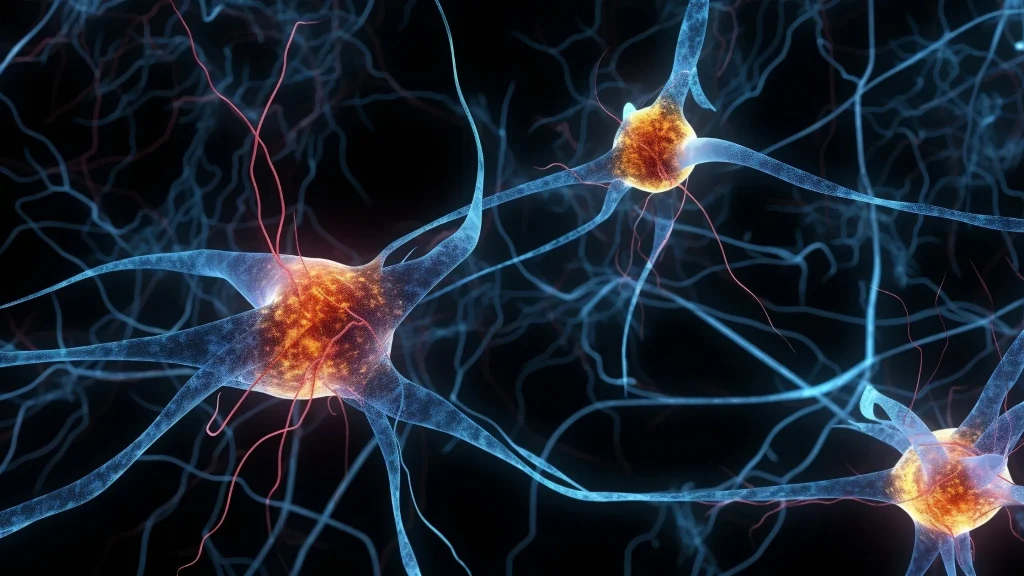
Recent advancements in high-density electroencephalography (hdEEG) and intracranial micro-electrode arrays enable neuroscientists to track spatial voltage shifts across millimeter-scale cortical surfaces.
Advanced computational algorithms isolate dynamic traveling components from stationary background noise.
Researchers utilize phase-velocity analysis to calculate exact propagation speed, directional vectors, and regional coherence during complex cognitive tasks.
Further insights published by Nature Neuroscience, highlight how invasive electrocorticography (ECoG) in human surgical patients confirms the existence of rotating and linear wave patterns during sleep consolidation and active memory retrieval.
These non-invasive tools transition spatial neural wave tracking from specialized laboratory experiments directly into clinical neurodiagnostics.
Frequently Asked Questions
What is the main difference between a standing wave and a traveling wave in the brain?
A standing wave fluctuates up and down in a fixed cortical location without spatial movement. A traveling wave propagates across the neural tissue over time, transferring contextual information across centimeters of brain surface.
Can individuals intentionally alter their traveling brain waves?
Yes. Neurofeedback training, targeted mindfulness practices, and non-invasive brain stimulation (like tACS) modulate wave frequencies, directional coherence, and spatial synchronization to improve task focus.
How quickly do traveling brain waves move across the cortex?
Cortical traveling waves typically propagate at speeds ranging from 0.1 to 0.8 meters per second, depending on frequency band, underlying white matter architecture, and current cognitive demands.
Understanding traveling brain waves transforms our perspective on human perception from static functional maps to interconnected temporal choreography.
Tracking how these electrical ripples flow across neural surfaces provides the key to unlocking sharper cognitive focus, earlier clinical diagnoses, and targeted therapies for complex neurological conditions.
++ Mysterious waves sweeping across your brain may help turn sensory chaos into what you see
++ Distinct roles of forward and backward alpha-band waves in spatial visual attention
