
How the Claustrum Helps the Brain Prepare for Uncertainty Today
The Claustrum is a thin, mysterious sheet of neurons hidden deep within the cerebral cortex that acts as a central node for processing unpredictable environmental signals and preparing the brain for uncertainty.
Anúncios
For decades, neuroscientists struggled to pinpoint the exact functional purpose of this slender subcortical structure.
Often described as a grand conductor or switchboard of the mind, emerging brain research shows that this intricate neural nexus coordinates large-scale cortical networks when outcomes are unpredictable, enabling rapid shifts in focus and executive control.
Understanding how this deep-brain structure operates offers valuable insights into cognitive resilience, attention management, and neural flexibility in high-stress environments.
Key Takeaways
- Central Processing Hub: The claustrum acts as a high-speed relay station that connects virtually all regions of the cerebral cortex, facilitating rapid dynamic network switching.
- Uncertainty Management: When faced with ambiguous or sudden environmental cues, this structure suppresses irrelevant cortical noise and amplifies signal focus.
- Network Coordination: It modulates the dynamic balance between the Default Mode Network (DMN) and the Central Executive Network (CEN) during high-demand cognitive tasks.
- Clinical Significance: Dysregulation in claustrum circuitry is increasingly linked to mood disorders, schizophrenia, attention deficits, and chronic anxiety under stress.
What Is the Claustrum and Where Is It Located?
Located in both hemispheres of the mammalian brain, the claustrum is a thin, bilateral layer of gray matter embedded between the insular cortex and the putamen.
Despite its small physical volume, it boasts one of the highest densities of reciprocal cortical connections per unit volume found anywhere in the central nervous system.
Neuroanatomists long viewed this structure as a passive relay station.
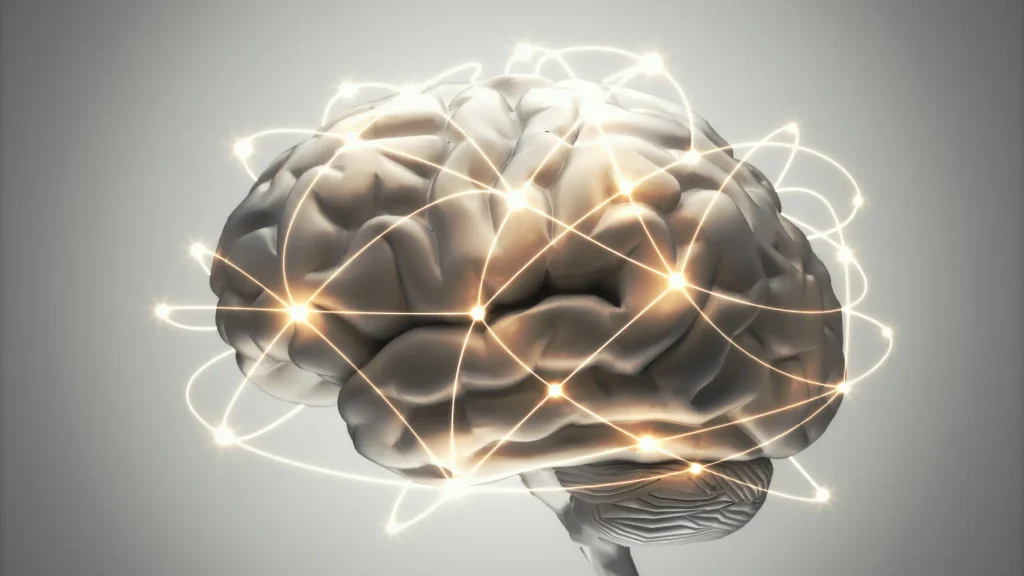
However, modern functional neuroimaging (fMRI) and optogenetic tracing have revealed that its widespread connectivity enables it to monitor sensory inputs, evaluate risk, and direct cognitive resources across distant regions of the brain.
How the Brain Processes Uncertainty and Ambiguity
Uncertainty occurs when the brain lacks sufficient information to predict outcomes accurately.
In unpredictable situations, the central nervous system must process raw sensory inputs while simultaneously evaluating risk, inhibiting distractions, and preparing motor responses.
++ Why Cerebellar Rhythms Matter Beyond Movement Control
When unpredictable challenges arise, the brain relies on specific functional networks:
- The Default Mode Network (DMN): Active during rest, self-reflection, and internal thought processes.
- The Central Executive Network (CEN): Active during goal-directed tasks, decision-making, and problem-solving.
- The Salience Network: Detects novel, unexpected, or urgent environmental events.
Without effective coordination between these networks, cognitive processing becomes fragmented, leading to delayed response times, poor risk assessment, and elevated emotional distress.
The Role of the Claustrum in Preparing for the Unknown
Recent neurobiological research suggests that the claustrum operates as an executive coordinator during moments of elevated unpredictability.
Read more: The Science Behind Neural Reuse Theory Explained Simply
Rather than generating complex thoughts on its own, it functions as a dynamic gatekeeper that allocates attentional bandwidth across the cortex.
Dynamic Attentional Gating
When an unexpected event occurs, the claustrum selectively suppresses irrelevant cortical activity while enhancing signals relevant to the immediate challenge.
This process—known as attentional gating—prevents sensory overload and sharpens cognitive focus.
According to research from the National Institutes of Health (NIH), mapping subcortical connections has provided unprecedented clarity on how the human brain maintains attention and adapts during high-pressure cognitive transitions.
Coordinating Cortical Networks
During predictable tasks, the brain operates efficiently using well-established neural pathways.
However, when conditions change unexpectedly, the claustrum facilitates a rapid transition from internal processing (DMN) to task-oriented execution (CEN).
++ Why Time-First Planning Helps You Set More Realistic Work Goals
By temporarily inhibiting background cortical noise, it allows executive control centers in the prefrontal cortex to analyze risks and adapt behaviors swiftly.
Subcortical Structures Involved in Cognitive Control
To understand how the claustrum supports decision-making under uncertainty, it is helpful to compare its specialized function with other key subcortical structures:
| Subcortical Structure | Primary Functional Focus | Key Connectivity | Role in Uncertainty & Stress |
| Claustrum | Network switching, noise reduction, focus allocation | Extensive reciprocal links to all cortical areas | Coordinates dynamic switching between internal reflection and task execution |
| Amygdala | Threat detection, emotional processing, fear conditioning | Hippocampus, hypothalamus, prefrontal cortex | Triggers rapid emotional and physiological stress responses |
| Thalamus | Sensory relay, sleep regulation, motor coordination | Sensory organs, brainstem, motor cortex | Filters incoming raw sensory data before cortical processing |
| Striatum | Habit formation, reward processing, motor action | Basal ganglia, prefrontal cortex, dopamine pathways | Evaluates reward outcomes and executes action selection |
Practical Applications for Cognitive Resilience and Mental Health
Understanding the brain’s uncertainty mechanisms highlights actionable ways to build daily cognitive resilience, reduce mental fatigue, and manage unpredictable stresses.
1. Optimize Environmental Stimuli
Excessive sensory clutter overburdens attentional networks. Reducing continuous background interruptions—such as persistent digital notifications—allows neural circuits to conserve energy for unexpected high-priority demands.
2. Practice Structured Cognitive Offloading
When facing ambiguous or overwhelming projects, externalize decisions through written task lists, process outlines, or strategic frameworks. Reducing cognitive load minimizes the effort required for dynamic network switching.
3. Incorporate Mindfulness and Focus Training
Targeted focus exercises and mindfulness training strengthen functional connectivity within the brain’s executive networks.
Studies hosted by the National Center for Biotechnology Information (NCBI) demonstrate that regular cognitive training improves attentional control and neuroplasticity under stress.
Frequently Asked Questions
What does the claustrum do in the human brain?
It acts as a central coordinator for cortical networks. It modulates attention, filters unnecessary background noise, and helps the brain switch between internal reflection and focused external execution during unpredictable tasks.
Is the claustrum responsible for consciousness?
While early theories proposed that this structure was the singular seat of conscious experience, contemporary neuroscience views it primarily as a network hub that integrates attention, sensory inputs, and executive control across distant brain regions.
How does uncertainty affect neural processing?
Uncertainty increases cognitive load by forcing the brain to evaluate multiple potential outcomes simultaneously. This demands rapid shifts between resting-state and executive networks to maintain focus and adapt behavior.
Can cognitive training improve focus under uncertain conditions?
Yes. Practices such as mindfulness, structured decision-making, and targeted stress management can enhance neural plasticity and optimize attention management when navigating high-stress or unpredictable environments.
Conclusion
The claustrum serves as an essential internal coordinator, equipping the human brain to evaluate risk, filter distractions, and adapt dynamically to unexpected events.
By regulating communication across large-scale cortical networks, this specialized neural region ensures that cognitive focus remains sharp when conditions are unpredictable.
Applying principles of attentional hygiene, stress management, and structured decision-making supports these deep-brain networks, fostering lasting cognitive resilience in an uncertain world.
++ Human claustrum neurons encode uncertainty and prediction errors during aversive learning
++ Neural Encoding of Uncertainty: How Claustrum Neurons Manage Aversive Learning Errors
