
Why Predictive Brain Models Are Changing Neuroscience
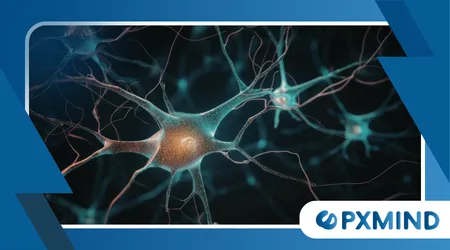
Predictive Brain Models Are Changing Neuroscience by dismantling the old image of the mind as a reactive camera, replacing it with something far more ambitious: a relentless, biological simulation engine.
Anúncios
Summary
- The Shift: Moving from passive sensory reception to active, top-down anticipation.
- Mechanisms: How the “Bayesian Brain” calculates reality through error correction.
- Clinical Impact: New lenses for understanding schizophrenia, autism, and chronic anxiety.
- AI Synergies: Why the next generation of machine learning mimics biological “priors.”
What Is the Theory Behind Predictive Brain Models?
For decades, we were taught that the brain waits for the world to happen to it. This “bottom-up” view suggested our eyes and ears captured data, sent it upstream, and the cortex eventually assembled a picture. It turns out that process is far too slow for survival.
Modern neuroscience suggests the opposite is true. Your brain is an inference machine that spends its time guessing what will happen next.
It builds internal models—mental maps of physics, social cues, and light—and projects them outward.
When you walk through your house at night, you aren’t really “seeing” the hallway; you are navigating a high-fidelity memory. Your senses aren’t there to build the image, but to audit it.
This flip in perspective is why Predictive Brain Models Are Changing Neuroscience. We are moving away from the idea of objective perception toward “controlled hallucinations” that keep us alive and efficient.
How Does the Predictive Processing Framework Work?
The brain hates surprises because surprise is metabolically expensive. To save energy, it uses a hierarchical system to minimize what researchers call “prediction error” across different layers of the cortex.
Imagine your brain as a stubborn editor. It has a script of how a coffee shop should look and sound. As long as the sensory data matches the script, the higher brain centers stay quiet.
Only when something breaks the pattern—a loud crash or a familiar face in an unexpected place—does a “prediction error” signal move up the chain. This forces the brain to update its internal model.
This constant feedback loop allows us to process the world at lightning speed. By predicting the mundane, our neural resources remain free to focus entirely on the unexpected nuances of our environment.
Why These Models Are Reframing Research
The most haunting implication of this theory lies in psychiatry. If our reality is a construction of internal models, then mental illness might simply be a breakdown in the “math” of those predictions.
In schizophrenia, for instance, the brain might over-weight internal predictions while ignoring external sensory evidence. This leads to the perception of voices or visions that feel entirely real to the observer.
Autism research offers a different perspective. Some theorists argue that in autistic brains, every sensory detail is treated as a “new” error, making the world feel overwhelmingly chaotic and impossible to filter.
++ What Neuroscience Tells Us About Decision Fatigue
By treating these conditions as predictive malfunctions rather than vague chemical imbalances, Predictive Brain Models Are Changing Neuroscience into a precise, computational discipline capable of personalized interventions.
Quantitative Impact of Predictive Coding in Modern Studies
Data from the last three years confirms that the brain prioritizes “priors”—our pre-existing beliefs—over raw data. Neural activity actually drops when a stimulus is expected, proving the efficiency of anticipation.
| Metric of Study | Traditional Reactive Model | Predictive Coding Model |
| Metabolic Cost | High; processes every pixel | Low; processes only changes |
| Response Latency | 150–200ms (Delayed) | < 50ms (Anticipatory) |
| Data Flow | Bottom-up (Sensory first) | Top-down (Expectation first) |
| Diagnostic Focus | Structural damage | Inference and weight errors |
Which Breakthroughs Link Predictive Models to Artificial Intelligence?
Silicon Valley is currently obsessed with “World Models.” Instead of training AI to recognize millions of static images, engineers are building systems that learn to predict the next frame in a sequence.
This mimics the biological shortcut of anticipation. By allowing an AI to “dream” or simulate the consequences of its movements, we create robots that navigate complex spaces without needing massive computational power.
The synergy here is recursive. As we refine the algorithms that power autonomous vehicles, we gain a better mathematical vocabulary to describe the human visual cortex. It is a rare moment where biology and engineering speak the same language.
Recent findings published in Nature Neuroscience highlight how integrating these “biological priors” into deep learning has slashed the energy requirements for complex machine reasoning.
When Did This Paradigm Shift Become the Standard?
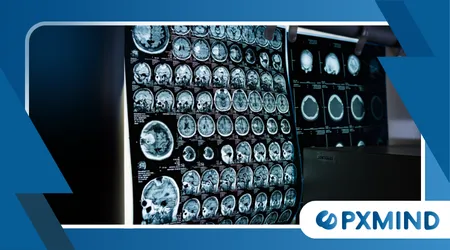
The “Bayesian Brain” isn’t a new concept, but it lacked physical proof until the arrival of ultra-high-resolution fMRI. We can now see the physical traffic of top-down signals moving against the sensory flow.
There is something unsettling about realizing your eyes don’t show you the world as it is. We don’t see the blur when we blink because the brain predicts the visual gap and “fills it in.”
Read more: How the Brain Prioritizes Information Without You Noticing
Earlier neuroscience struggled to explain these gaps. Now, we understand that the brain isn’t just a computer; it’s a proactive architect that values stability over raw, unedited truth.
This realization is precisely why Predictive Brain Models Are Changing Neuroscience. We have moved from asking “where” a thought happens to asking “how” the brain calculates its next move.
The Implications for Human Consciousness
If we are living inside a simulation generated by our own biology, the concept of “self” becomes much more fluid. Our emotions might just be predictions of our internal bodily states.
This theory, known as interoceptive inference, suggests that “feeling” a racing heart is the brain’s way of predicting a need for action. We don’t just feel; we infer our feelings based on context.
Mastering these internal models offers a radical path for therapy. If we can train the brain to re-weight its predictions of pain or fear, we could potentially treat chronic conditions without traditional medication.
++ How Rosy Retrospection Changes the Way You Remember Life
It is a profound shift. Predictive Brain Models Are Changing Neuroscience by suggesting that the key to mental health isn’t just changing our thoughts, but recalibrating the underlying “priors” that build our world.
Enhancing Cognitive Longevity
Aging is often characterized by a loss of “predictive plasticity.” As we grow older, our internal models can become rigid, making it harder to learn new skills or adapt to changing environments.
Neuroscientists are now looking at ways to “shake up” these models. Activities that force the brain to resolve high-level prediction errors—like learning a complex dance or navigating a new city—keep the neural machinery limber.
These aren’t just memory games; they are exercises in model-updating. By staying in a state of “controlled surprise,” we may be able to protect the cortex from the stagnation that leads to cognitive decline.
The research is clear: the most resilient brains are those that remain capable of being “wrong” and updating their internal maps accordingly.
Future Trends: The 2026 Perspective
We are entering the era of “Precision Psychiatry.” Soon, a patient’s “predictive weight” could be measured via a digital assay, allowing for treatments that address the specific math of their perception.
Brain-computer interfaces (BCIs) are also adopting this logic. Instead of waiting for a user to move a cursor, the next generation of BCIs will predict the intent, making the technology feel like a natural extension of the body.
This shift toward mathematical biology is inevitable. We are finally moving away from the “black box” approach to the mind and toward a clear, quantifiable map of how consciousness is calculated.
Ultimately, Predictive Brain Models Are Changing Neuroscience because they prove the mind is never a spectator. It is an active, tireless creator of every sunrise, every conversation, and every memory we experience.
The move toward predictive frameworks is the most significant leap in our quest to understand ourselves. It explains why two people can see the same event and perceive entirely different realities.
By recognizing that our brains are constantly guessing the future, we gain a new level of agency over our mental lives.
This fusion of computational theory and biological reality ensures that our understanding of the human experience will never be the same.
For a deeper dive into the computational architecture of these neural systems, explore the latest research from the MIT Department of Brain and Cognitive Sciences.
FAQ (Frequently Asked Questions)
What is the biggest advantage of a predictive brain?
Energy conservation is the primary driver. By anticipating the environment, the brain only has to “work” when something unexpected happens, allowing it to run on the power equivalent of a dim lightbulb.
Is my perception of the world “fake”?
Not exactly. It is a “best guess” informed by reality. Your brain uses sensory data to keep its internal simulation grounded in the physical world, but the simulation is what you actually experience.
Can I change my brain’s predictive models?
Yes, through a process called neuroplasticity. By consistently exposing yourself to new environments and challenges, you force your brain to update its “priors” and build more flexible internal models.
Why is this important for artificial intelligence?
Current AI uses massive amounts of electricity. By teaching AI to use predictive coding, we can create systems that are much more efficient, learning from “surprise” rather than brute-force data processing.
++ The predictive nature of spontaneous brain activity across scales and species
