
Why Knowledge Retention Loops Improve Long-Term Memory
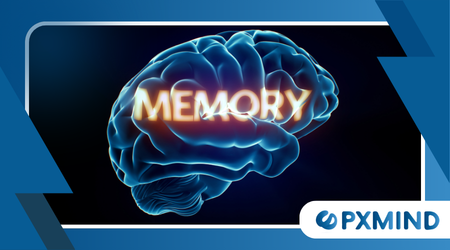
Knowledge Retention Loops represent a definitive advancement in modern cognitive science, transforming how professionals and students acquire permanent, actionable expertise.
Anúncios
In an era dominated by information overload, traditional cramming fails because it ignores how our brains physically construct lasting neural pathways.
By shifting from passive consumption to structured, iterative recall, you can systematically upgrade your mental architecture for flawless information retrieval.
Table of Contents
- What is a Knowledge Retention Loop?
- How Does the Brain Consolidate Information Long-Term?
- Why Do Standard Learning Methods Fail Us?
- Which Cognitive Strategies Optimize the Loop?
- What Are the Quantifiable Benefits of Iterative Recall?
- Frequently Asked Questions
What is a Knowledge Retention Loop?
Think of a knowledge retention loop as a continuous circuit designed to intercept the brain’s natural tendency to drop unused data. Instead of treating education as a straight line with a definitive finish line, this framework loops study back on itself.
The process moves dynamically through four essential stages: first, you encode new information; next, you introduce a strategic delay; then, you trigger active retrieval; and finally, you apply corrective feedback before repeating the loop.
This structural approach integrates spaced repetition, active recall, and immediate feedback mechanisms to ensure information transitions smoothly from working memory into deep storage.
Neuroscientists confirm that memory is not a static recording device but a dynamic, living muscle requiring deliberate, calculated stimulation to grow.
Implementing these cyclical habits prevents the steep decline in data retention that typically occurs within forty-eight hours of reading new material.
Consequently, learners maintain high levels of accessibility to complex concepts without needing to relearn the foundational pieces from scratch.
How Does the Brain Consolidate Information Long-Term?
Neurological consolidation relies heavily on synaptic plasticity, a biological process where synapses strengthen through repeated, intense activation.
When you intentionally encounter information at expanding intervals, you stimulate specific neural circuits, signaling to your brain that this data possesses critical survival value.
The hippocampus initially processes incoming facts, acting as a temporary holding dock before distributing memories to the neocortex for permanent residency.
This cortical migration occurs primarily during deep sleep cycles, where the brain replays the day’s cognitive patterns at accelerated speeds.
By utilizing structured knowledge retention loops, you actively manipulate this biological architecture, ensuring vital data undergoes thorough consolidation rather than simple decay.
Every time you force your brain to retrieve a fading memory, you thicken the myelin sheath surrounding those specific neural pathways.
++ How Cognitive Offloading Is Changing Modern Learning Habits
This physiological reinforcement accelerates future retrieval speeds, making complex mental automation possible.
Why Do Standard Learning Methods Fail Us?
Passive re-reading and linear highlighting create a powerful psychological illusion known among cognitive psychologists as the fluency heuristic.
Because the text looks familiar as your eyes glide across the page, your brain mistakenly convinces itself that it has mastered the underlying material.
When tested under high-stakes conditions, this superficial familiarity crumbles rapidly because the passive approach never built the necessary retrieval pathways.
Research indicates that standard educational models prioritize the input phase of learning while completely neglecting the crucial output phase required for permanent storage.
Without deliberate retrieval practice, the human mind sheds up to seventy percent of new data within a single calendar week.
Read more: Why Neurolearning Techniques Boost Memory Retention Fast
Relying on continuous massed study sessions creates rapid burnout and fragile, short-term memories that evaporate almost immediately after an examination concludes.
Which Cognitive Strategies Optimize the Loop?
Maximizing your learning efficiency requires pairing active recall with sophisticated scheduling algorithms to exploit the biological limits of human memory.
The most powerful framework combines the Leitner flashcard system with targeted reflection sessions, ensuring you challenge your mind precisely when forgetting begins.
The foundational anatomy of this framework relies on a distinct four-stage cycle. You begin with active encoding by translating concepts into your own words, followed by a spaced delay where you wait one, three, and then seven days before review.
This sets the stage for forced retrieval, where you test your mind without looking at notes, ending with a metacognitive audit to analyze errors and fine-tune your loop timing for permanent neocortical storage.
You must also embrace desirable difficulties, which are deliberate mental hurdles that make the initial learning phase feel significantly more strenuous.
Interleaving distinct, related topics instead of focusing on one subject forces the brain to constantly discern subtle differences between concepts.
According to a comprehensive meta-analysis published by the National Center for Biotechnology Information, testing yourself during the learning process yields vastly superior long-term retention compared to traditional passive study behavior.
This intentional struggle forces deep cognitive processing, building versatile mental models that allow you to apply abstract concepts across entirely new, unfamiliar scenarios.

What Are the Quantifiable Benefits of Iterative Recall?
Shifting your study architecture to integrated learning cycles delivers measurable upgrades to both learning velocity and factual accuracy.
++ How Ghosting Psychology Affects Modern Relationship
Data gathered across empirical cognitive studies demonstrates that systematic retrieval schedules flatten the traditional Ebbinghaus forgetting curve permanently.
| Learning Methodology | Retention After 1 Day | Retention After 7 Days | Retention After 30 Days |
| Passive Re-reading | 50% | 20% | 5% |
| Massed Cramming | 80% | 30% | 10% |
| Iterative Recall Loops | 95% | 85% | 80% |
The empirical evidence clearly indicates that iterative testing protocols protect information from degrading over extended durations.
Furthermore, these systems dramatically reduce the total time required for long-term mastery by eliminating redundant review sessions on already familiar concepts.
Professionals utilizing these frameworks adapt to rapidly changing industry demands far faster than peers who rely on old, outdated reading habits.
Ultimately, the systematic application of loops turns your mind into an organized, highly accessible database capable of rapid execution.
How to Build Your Personal Learning Framework
Constructing a highly functional loop begins with digitizing your information gathering into discrete, atomic units of knowledge that are easily testable.
Utilize modern software tools like Anki or Obsidian to catalog your insights, transforming static text into dynamic prompt-and-response pairings immediately.
Schedule your reviews using a geometric progression scale, checking your understanding at intervals of twenty-four hours, four days, then two weeks.
The progression flows predictably from initial learning on day one, to reviews on days two, six, and twenty, though any retrieval failure instantly resets that specific concept back to the starting line.
Always write your summaries using entirely unique phrasing, completely avoiding the temptation to copy and paste original source material directly.
This forced translation process ensures you comprehend the actual substance of the data before trying to memorize its structural components.
Moving Beyond Simple Memorization to True Mastery: Knowledge Retention Loops
True intellectual mastery requires advancing past basic factual recognition and pushing your brain toward synthetic, high-level conceptual integration.
As your loops become habitual, begin connecting newly acquired data points to existing mental models already stored deeply within your mind.
Discussing your findings with peers or writing public explanations forces you to diagnose hidden gaps in your current understanding.
This practice, popularized as the Feynman Technique, acts as an additional diagnostic layer within your broader learning strategy.
Over time, this deliberate synthesis builds an interconnected web of knowledge, making every subsequent piece of information much easier to anchor.
By prioritizing the structural integrity of your retrieval pathways, you secure a sustainable, compounding competitive advantage in any professional field.
Closing Thoughts
Embracing systematic learning structures fundamentally shifts your relationship with information, transforming fleeting thoughts into permanent mental assets.
By aligning your daily study habits with verified neurological mechanics, you escape the exhausting cycle of learning and immediately forgetting.
Commit to active testing, trust the spacing effect, and continuously audit your understanding through rigorous, structured feedback.
For more insights into optimizing your cognitive performance and mastering advanced learning design, explore the cutting-edge neuroplasticity research available through the Harvard Dana Center for Brain Initiatives.
Frequently Asked Questions
What is the primary difference between active recall and passive review?
Active recall requires you to actively generate an answer from memory without prompts, which builds strong neural pathways.
Passive review involves simply reading over notes or textbooks, creating an illusion of competence without building lasting recall structures.
How often should I repeat the review cycles for optimal memory?
You should space your reviews at expanding intervals, such as one day, four days, seven days, and fourteen days after encoding.
This specific timing interrupts the forgetting curve precisely when the memory begins to slip from your conscious awareness.
Can these learning techniques be applied to highly abstract or creative fields?
Absolutely. While factual data is easily adapted to loops, abstract concepts benefit immensely from interleaving and variable practice within the loop system.
This process builds versatile mental models that enhance creative problem-solving capabilities across diverse disciplines.
++ Leveraging Spaced Repetition for Long-Term Knowledge Retention
++ Long-Term Memory: How Knowledge Sticks and Why It Matters for Teaching
