
The Neurological Basis of Impulse Control
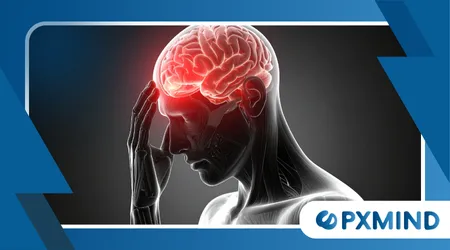
The intricate dance of decision-making, where Neurological Basis of Impulse Control holds the key, defines our ability to delay gratification, resist temptation, and pursue long-term goals over immediate desires.
Anúncios
Understanding this complex process requires delving deep into the architecture of the brain, a fascinating, dynamic network constantly evaluating risks and rewards.
This fundamental human capacity is not merely a matter of willpower; it is a sophisticated neurological process sculpted by evolution and experience.
What Brain Regions Govern Our Ability to Stop and Think?
The primary orchestrator of impulse control resides in the prefrontal cortex (PFC), particularly its subregions.
This anterior part of the frontal lobe serves as the brain’s “executive control center,” crucial for planning and cognitive flexibility.
Its role is to inhibit inappropriate responses and facilitate goal-directed behavior.
Specific areas like the ventromedial prefrontal cortex (vmPFC) and the dorsolateral prefrontal cortex (dlPFC) are heavily implicated.
The vmPFC processes risk and fear, influencing emotional regulation and decision-making. Meanwhile, the dlPFC manages working memory and cognitive control.
These regions don’t operate in isolation; they form complex circuits with subcortical structures.
The interplay with the striatum, part of the basal ganglia, is especially significant.
The striatum processes reward signals, driving the desire for immediate gratification.
This constant tug-of-war between the frontal brake and the subcortical accelerator is the core of impulse regulation.
When the PFC is fully engaged, it can successfully suppress the striatum’s urge for instant reward. Impaired connectivity in this circuit leads to compromised self-control.
How Does Neurotransmission Influence Our Immediate Decisions?
Neurotransmitters act as the brain’s chemical messengers, crucially modulating the intensity of urges and the strength of the inhibitory control.
Dopamine, often associated with pleasure and reward, is central to this mechanism.
High levels of dopamine activity in the striatum can amplify the perceived value of a potential reward.
Conversely, the PFC relies heavily on serotonin and GABA (gamma-aminobutyric acid) to exert its inhibitory power.
Serotonin helps regulate mood and suppresses impulsive aggression or craving.
GABA is the brain’s primary inhibitory neurotransmitter, effectively dampening neuronal excitability.
Read more: How the Brain Predicts What Happens Next
The balance of these chemical signals determines whether an individual yields to a fleeting temptation or maintains self-discipline.
This dynamic chemical environment constantly shifts, reflecting internal states and external stimuli.
Consider a simple scenario: resisting a late-night snack. The sight and smell trigger a dopamine surge in the striatum, screaming for consumption.
A functioning PFC uses its serotonergic and GABAergic resources to override this primitive drive.
Why is the Neurological Basis of Impulse Control Relevant to Modern Life?
A robust understanding of the Neurological Basis of Impulse Control offers profound insights into numerous behavioral and mental health conditions.
Conditions like Addiction, Attention-Deficit/Hyperactivity Disorder (ADHD), and Obsessive-Compulsive Disorder (OCD) all feature compromised impulse regulation.
Read here: Understanding Mirror Neurons and Social Connection
For example, in addiction, the reward pathway becomes hyper-responsive, while the PFC’s inhibitory function weakens.
Another critical area is the study of financial decision-making and risk-taking.
People with damaged vmPFC often exhibit poor financial judgment and engage in excessive risk-taking behavior.
This demonstrates that impulse control extends beyond simple physical urges into complex cognitive domains.
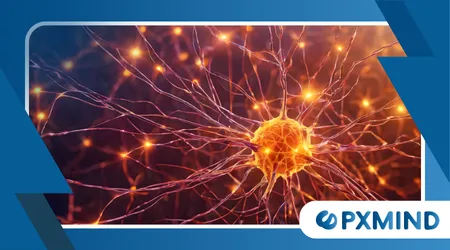
Example: The “Digital Distraction Loop”
A person is trying to finish a crucial work report. Every 10 minutes, a phone notification lights up, activating the striatal reward circuit.
A strong PFC resists the urge to check the phone, maintaining focus on the larger, delayed reward (a finished report).
++Is Your Lifestyle Fueling Your Anxiety?
A weaker inhibitory system immediately grasps the phone, succumbing to the quick, immediate pleasure of the notification. This is a common, modern test of self-regulation.
How Can We Measure and Strengthen Impulse Control?
Researchers employ several tasks to measure inhibitory control, notably the Go/No-Go task and the Stop-Signal task.
These tests monitor a person’s ability to halt a pre-programmed response, revealing PFC efficacy.
Brain imaging techniques like fMRI (functional Magnetic Resonance Imaging) map the activation patterns of the relevant brain regions during these tasks.
A landmark 2011 study by A. L. Schlam and colleagues analyzing the Marshmallow Test (delayed gratification) found a robust connection.
Children who successfully delayed gratification showed more activation in the prefrontal cortex and less activation in the ventral striatum when adults, confirming the lifelong significance of this neural circuit.
Strategies to strengthen this function involve training and behavioral therapy.
Mindfulness and meditation are shown to increase PFC gray matter density and improve functional connectivity with the limbic system.
This practice enhances non-judgmental awareness, effectively strengthening the cognitive brake.
Example: The Marathon Training Analogy
Impulse control is like training a muscle. You don’t start running a marathon on day one. You begin with small, manageable runs.
Similarly, you start by resisting minor urges—like not hitting the snooze button—before tackling major behavioral changes.
Each small victory strengthens the Neurological Basis of Impulse Control circuit.
What Role Does Genetics and Environment Play in Impulse Control Development?
Both nature and nurture are integral to the development of self-control. Genetic variations can influence the efficiency of dopamine and serotonin receptors.
For instance, specific polymorphisms in the COMT gene affect dopamine breakdown, impacting PFC function and contributing to differences in cognitive control.
However, environmental factors, particularly early-life stress and parenting styles, dramatically shape the PFC’s maturation.
A nurturing and predictable environment fosters better executive function development.
Chronic stress, conversely, can impair PFC development and leave an individual more prone to impulsive reactions.
The development of the prefrontal cortex continues into the mid-twenties, explaining why adolescents are often characterized by heightened risk-taking and impulsivity.
Their reward systems are fully mature, but the “braking” system is still under construction.

Can Lifestyle Changes Truly Impact Our Self-Control Circuits? Neurological Basis of Impulse Control
Absolutely. Lifestyle is a powerful modulator of brain function.
Physical exercise increases BDNF (Brain-Derived Neurotrophic Factor), supporting neuronal growth and plasticity, particularly in the PFC.
Adequate sleep is equally vital, as sleep deprivation severely impairs executive functions and leads to greater impulsivity.
Furthermore, a healthy diet rich in omega-3 fatty acids and antioxidants supports overall brain health, indirectly benefiting impulse control.
These simple, consistent choices profoundly impact our capacity for self-regulation.
The ability to resist an urge today is influenced by the quality of sleep one had last night.
How often do we truly pause and consider that our immediate actions are pre-determined by our fundamental self-care?
According to a 2023 review published in Translational Psychiatry, approximately 60% to 80% of individual differences in impulsivity are attributed to environmental and non-shared experiences, highlighting the power of behavioral intervention over genetics.
Mastering the Inner Controller
The Neurological Basis of Impulse Control is an elegant yet vulnerable system, representing the pinnacle of human cognitive ability.
It is a constantly evolving balance between the immediate pull of pleasure and the considered pursuit of long-term value.
By understanding the roles of the PFC, the striatum, and key neurotransmitters, we gain a framework not just for explaining behavior but for actively improving it.
The conscious effort to pause, evaluate, and choose a difficult path over an easy one is a neurobiological victory—a testament to the plasticity and potential for mastery inherent in the human brain.
Frequently Asked Question
What is the “Dual-Process” Theory of Impulse Control?
This theory posits that decision-making is governed by two interacting systems: a fast, intuitive, and impulsive system (System 1, linked to the striatum) and a slower, deliberate, and rational system (System 2, linked to the PFC).
Impulse control is the successful override of System 1 by System 2.
Does chronic stress permanently damage the brain’s impulse control center?
Chronic, unmanaged stress, particularly in early life, can lead to structural and functional changes in the prefrontal cortex, making it less effective in regulating emotions and impulses.
However, the brain is highly plastic, and interventions like therapy and mindfulness can promote recovery and reorganization.
Is poor impulse control always a sign of a disorder?
No. Everyone experiences occasional lapses in self-control.
Poor impulse control only becomes clinically significant when it is persistent, pervasive, and causes substantial distress or impairment in social, occupational, or other important areas of functioning.
++ CHAPTER 8 The Common Neural Basis of Exerting Self-Control in Multiple Domains
