
How the Brain Prioritizes Information Without You Noticing
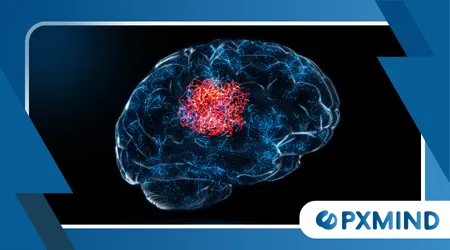
Brain Prioritizes Information Without You Noticing long before attention feels intentional. What reaches awareness is never the full picture, but a carefully edited version shaped by urgency, memory, emotion, and quiet biological preferences.
Anúncios
Introduction and Content Overview
Every second, the brain negotiates what deserves space in consciousness and what should remain backstage. That negotiation is fast, mostly invisible, and far more opinionated than it appears.
This article explores how that silent sorting works, why it evolved this way, and what it reveals about attention, learning, and modern distraction. Not theory for theory’s sake, but insight with practical weight.
Summary
- What information prioritization actually means
- How neural filtering operates beneath awareness
- Why attention feels voluntary but often isn’t
- When emotion bends the rules
- Which systems decide relevance
- How this affects focus, learning, and technology use
What Is Information Prioritization in the Brain?
Information prioritization is the brain’s way of staying alive without burning out. Sensory input arrives in overwhelming volume, yet only a fraction earns deeper processing.
Instead of neutrality, the system favors efficiency. Signals linked to relevance, uncertainty, or consequence move forward, while the predictable fades quietly away.
What feels like perception is already the end result of heavy editing, not an objective feed of reality.
How Does the Brain Filter Information Automatically?
Filtering begins earlier than most people assume. Long before meaning or interpretation, neural circuits trim redundancy, suppress noise, and flag novelty.
The thalamus functions less like a passive relay and more like a customs checkpoint, regulating sensory traffic toward cortical regions. Olfaction, curiously, bypasses this gate, a reminder of ancient evolutionary shortcuts.
Predictive coding sharpens the process. When incoming data matches expectation, attention loosens. When it doesn’t, the brain leans forward. Surprise always gets a hearing.
Why Doesn’t Consciousness Control This Process?
Conscious control sounds appealing but scales poorly. Awareness is slow, metabolically costly, and limited in capacity.
The brain consumes roughly twenty percent of bodily energy, yet conscious processing handles only a thin stream of information. Full oversight would be inefficient, even dangerous.
Evolution solved this by delegating. By the time awareness arrives, the shortlist is already written.
When Do Emotions Override Rational Filtering?
Emotion is not an interruption of cognition; it is part of its prioritization engine.
Stimuli carrying emotional charge receive fast-tracked processing because they historically predicted threat, reward, or social consequence. This bias remains, even when context has changed.
The amygdala evaluates relevance with alarming speed. Logic often joins the conversation late, offering explanations after attention has already moved.
Which Brain Systems Decide What Matters Most?
No single structure runs the show. Prioritization emerges from interaction among attentional networks, emotional circuits, memory systems, and executive control.
The prefrontal cortex attempts top-down guidance, aligning attention with goals. Subcortical systems counter with bottom-up urgency, pulling focus toward salience.
++ What Brainwaves Reveal About Your Mental State
Research from institutions such as Stanford University shows that relevance is negotiated moment by moment, not dictated by a single command center.
What Role Does Memory Play in Prioritization?
Memory quietly biases perception. Past outcomes teach the brain what tends to matter, and those lessons shape future attention.
Patterns associated with reward, failure, or emotional weight gain privileged access. This happens even when the memory itself remains inaccessible to awareness.
Personal relevance, more than objective importance, often determines what stands out. That subjectivity is not a flaw; it is the system working as designed.
How Attention Differs From Awareness
Attention is selection. Awareness is presentation.
Many signals receive attentional resources without ever becoming conscious experiences. Skilled actions rely on this separation, allowing performance without constant monitoring.
Read more: The Neurological Basis of Impulse Control
This distinction helps explain how Brain Prioritizes Information Without You Noticing, maintaining efficiency while preserving the illusion of deliberate control.
Can the Brain Change Its Prioritization Rules? Brain Prioritizes Information Without You Noticing
The system is adaptable, though not instantly obedient. Repetition, emotional framing, and context reshape what earns priority.
Habits form when prioritization becomes predictable. Learning occurs when expectations are challenged and updated.
Read here: Why Saying Something Out Loud Helps You Remember
Work from MIT illustrates how experience-dependent plasticity gradually rewires attentional weighting, altering what feels naturally noticeable.
Data Snapshot: Brain Efficiency and Information Load
| Metric | Approximate Value | Established Consensus |
|---|---|---|
| Brain energy use | ~20% of body energy | Neuroscience literature |
| Sensory input rate | Millions of bits per second | Cognitive science |
| Conscious capacity | ~40–60 bits per second | Attention research |
| Working memory items | 4 ± 1 elements | Experimental psychology |
These constraints explain the brain’s ruthless selectivity. Processing everything equally would collapse the system.
Why Multitasking Feels Effective but Isn’t
Multitasking exploits rapid switching, not parallel processing. Each shift forces the brain to reassign priority, incurring hidden costs.
Accuracy slips. Memory weakens. Fatigue accumulates faster than expected.
The discomfort people feel during sustained focus is often misread as inefficiency, when it actually reflects the brain resisting constant reprioritization.
Practical Implications for Learning and Productivity
Information sticks when it aligns with emotional relevance, clear goals, and contextual meaning. Dry exposure rarely wins the prioritization battle.
Distraction works by hijacking salience systems, not by persuasion. Reducing competing signals matters more than increasing willpower.
Designing environments that respect how the brain allocates attention leads to deeper learning and more stable focus.
A clear explanation of attentional mechanisms is available from the American Psychological Association:
How Modern Technology Exploits Prioritization Systems
Digital platforms are engineered around salience, novelty, and intermittent reward. None of this is accidental.
Notifications interrupt because the brain treats them as potential updates to relevance maps. Each alert resets attentional priorities.
Understanding this dynamic reframes distraction as a design problem, not a personal failure.
Conclusion: Awareness Begins After Selection
Perception is not raw input but a curated experience, filtered by biology, history, and emotion.
Once this is understood, attention stops feeling mysterious and starts feeling negotiable.
Recognizing how Brain Prioritizes Information Without You Noticing offers a quieter form of agency: not control over everything, but influence over what earns a moment of mind.
For further authoritative insight into brain function fundamentals, consult the National Institute of Mental Health:
Frequently Asked Questions (FAQ)
Does the brain always prioritize survival-related information first?
Yes. Signals linked to threat, reward, or social consequence receive accelerated processing because they historically shaped survival outcomes.
Can mindfulness change information prioritization?
Mindfulness strengthens top-down regulation, softening automatic salience and stabilizing attention over time.
Is information filtering the same as ignoring?
Filtering occurs before awareness. Ignoring happens after something has already entered conscious experience.
Why do habits feel automatic?
Repetition trains prioritization systems to conserve energy, reducing the need for conscious oversight.
Is prioritization the same for everyone?
No. Experience, culture, emotion, and goals shape individual relevance maps, producing distinct perceptual worlds.
++ How the human brain can register information without conscious attention
++ How the brain splits up vision without you even noticing
