
La ciencia detrás de la teoría de la reutilización neuronal explicada de forma sencilla.
Comprensión Neural Reuse Theory changes how we view brain evolution entirely.
Anuncios
Scientists now believe cognitive flexibility stems from recycling existing physical structures efficiently.
Instead of growing new brain regions for modern tasks, human biology repurposes older circuits. Learning to read relies directly on ancient object recognition pathways.
Grasping these mechanisms helps researchers develop better treatments for neurological conditions today. We will explore exactly how evolution optimized our most complex biological organ.
Navigating this complex biological framework requires breaking down specific scientific mechanisms carefully.
The following summary outlines the primary concepts we will examine in detail today.
Summary:
- What is the core concept of brain recycling?
- How does the brain repurpose ancient neural circuits?
- Why do cognitive functions share physical brain regions?
- When does neural overlap cause cognitive interference?
- What evidence supports the cognitive reuse hypothesis?
- How do neuroimaging techniques reveal brain networks?
- Which neurological conditions benefit from this research?
- What are the future implications for neuroscience?
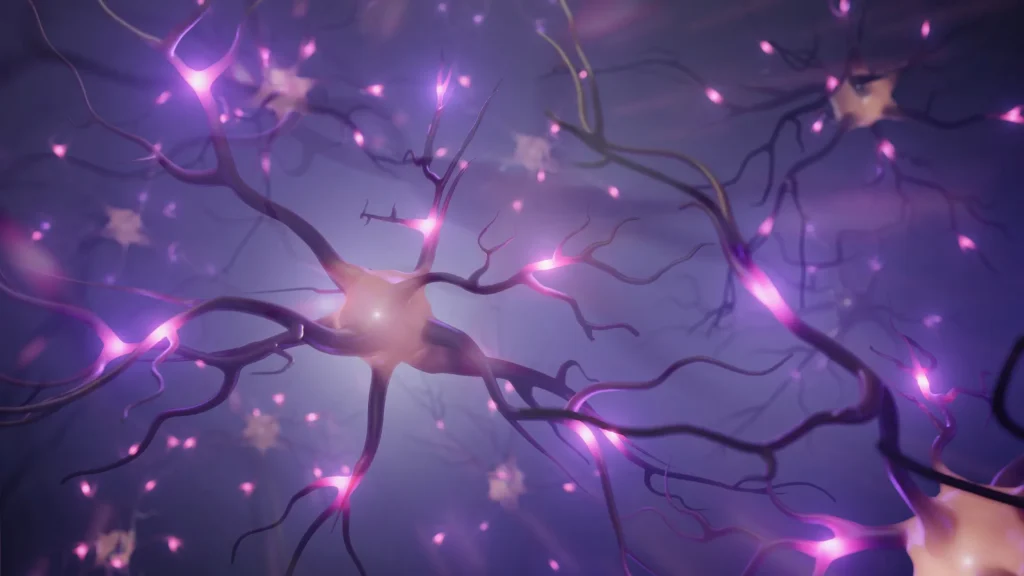
What is the core concept of brain recycling?
Michael Anderson popularized this framework to explain human neuroplasticity accurately and comprehensively.
His research demonstrates that specialized brain areas routinely participate in vastly different cognitive operations.
Cognitive neuroscience traditionally assigned one specific function to each physical brain region.
Modern imaging proves that local neural networks handle multiple distinct processing tasks dynamically.
Your brain acts like a smartphone running various applications simultaneously without crashing.
The exact same hardware components process complex mathematics and coordinate your physical motor movements.
Adopting this perspective solves a major evolutionary puzzle for modern biological scientists.
Human ancestors lacked sufficient time to evolve entirely new anatomical structures rapidly.
How does the brain repurpose ancient neural circuits?
Stanislas Dehaene coined the specific term neuronal recycling regarding early language acquisition. Human brains co-opted the visual word form area from primate facial recognition systems.
Recognizing letters requires precise high-resolution visual discrimination capabilities originally utilized entirely elsewhere.
Our early hunter-gatherer ancestors depended heavily on these exact pathways to track animals.
Cultural inventions push our biological hardware to its absolute processing capability limits.
Education essentially hacks into preexisting neural networks to install brand new cognitive software.
Neuroplasticity allows these functional shifts without erasing the original network processing capabilities.
Therefore, a single cerebral region maintains its ancient duties while adopting modern responsibilities.
Why do cognitive functions share physical brain regions?
Space inside the human skull remains strictly limited by basic skeletal anatomy. Expanding physical brain volume further would make natural childbirth incredibly dangerous for humans.
Evolution prefers metabolic efficiency over developing entirely novel anatomical structures repeatedly unnecessarily.
Reusing established circuitry saves immense cellular energy resources during daily human cognitive functioning.
Processing speed increases when related functions operate within shared physical neural pathways.
Localized networking dramatically reduces the time required for chemical signals to travel far.
We see similar efficiency models in advanced artificial intelligence programming environments today.
++ Por qué el aprendizaje hebbiano sigue influyendo en las conexiones cerebrales hoy en día.
Machine learning algorithms frequently apply established parameters to entirely different problem-solving domains efficiently.
When does neural overlap cause cognitive interference?
Sharing physical hardware sometimes leads to unavoidable processing bottlenecks during heavy multitasking.
Attempting two complex activities relying on identical local networks diminishes overall performance quality.
Motor control and complex language processing often utilize identical cortical processing areas.
Talking intensely while performing delicate manual tasks frequently causes noticeable physical clumsiness briefly.
Researchers observe these distinct limitations during functional magnetic resonance imaging brain scans.
Blood flow shifts predictably when subjects attempt conflicting cognitive exercises in laboratory settings.
Discovering these exact overlap zones helps scientists map human cognition highly precisely.
Check out how cognitive mapping informs modern behavioral psychology to understand memory constraints better.
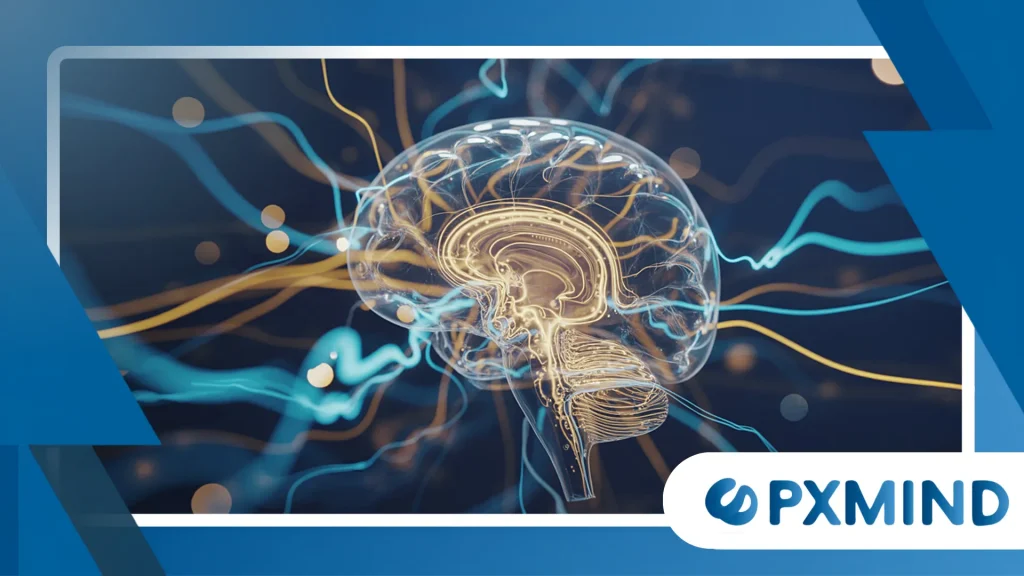
What evidence supports the cognitive reuse hypothesis?
Empirical data from modern imaging heavily validates these recent anatomical mapping frameworks.
Scans consistently show multiple diverse tasks activating the exact same cortical tissue clusters.
Scientists analyze vast databases documenting thousands of functional MRI experiments globally daily.
Statistical analyses prove that localized brain areas rarely serve single isolated cognitive purposes.
Brain injury patients provide crucial insights regarding functional network overlapping happening regularly.
Damage to one specific node often disrupts several seemingly unrelated behavioral abilities simultaneously.
Comparative anatomy between humans and primates reveals fascinating evolutionary structural divergence timelines.
Macaque monkeys utilize specific motor cortices similarly without possessing our advanced language capabilities.
Tracing these unique pathways highlights the sheer adaptability of mammalian neural tissue.
Leer más: Por qué la conciencia interoceptiva es importante para el funcionamiento del cerebro.
Environmental pressures clearly force biological systems to innovate using strictly limited available resources.
How do neuroimaging techniques reveal brain networks?
Advanced functional magnetic resonance imaging changed behavioral research methodologies almost overnight globally.
Doctors can finally watch thought processes moving across distinct physical brain regions dynamically.
Blood oxygenation level dependent signals track metabolic changes during highly active tasks.
Mapping these energy fluctuations identifies precisely which neuronal clusters handle specific cognitive demands.
Diffusion tensor imaging allows scientists to visualize structural connectivity nerve tract pathways.
Tracing white matter pathways reveals how distant cerebral modules communicate complex information instantly.
Magnetoencephalography captures electrical activity changes occurring within rapid microsecond processing time frames.
Researchers measure exactly when shared neural components switch between competing cognitive processing modes.
Combining multiple scanning technologies yields incredibly detailed maps of complex human cognition.
++ La ciencia detrás de la reinstauración del contexto para una mejor recuperación de la información.
These comprehensive atlases confirm that Neural Reuse Theory accurately models our biological reality.
Which neurological conditions benefit from this research?
Stroke recovery protocols utilize Neural Reuse Theory to restore lost physical abilities.
Undamaged brain regions can theoretically assume the responsibilities of permanently destroyed neural tissue.
Rehabilitation specialists design exercises targeting adjacent networks to stimulate functional capability transfer.
Consistent practice encourages healthy neurons to establish novel connections bypassing the damaged areas.
Autism spectrum research also relies heavily on these modern structural network models.
Atypical functional connectivity might explain sensory processing differences observed in neurodivergent individuals globally.
Mapping shared cognitive domains improves targeted interventions for developmental linguistic learning disorders.
Dyslexia treatments specifically aim to reorganize visual and auditory processing network integration successfully.
Observing specific anatomical structures clarifies how this phenomenon operates in physical reality.
The following data illustrates known functional shifts identified through modern neuroimaging studies worldwide.
| Región del cerebro | Original Evolutionary Function | Modern Reused Cognitive Function |
| Visual Word Form Area | Object and primate face recognition | Reading written language and complex text |
| Broca’s Area | Complex physical motor sequence control | Expressive syntax and advanced language processing |
| Intraparietal Sulcus | Spatial navigation and object reaching | Mathematical calculation and complex numerical cognition |
| Ínsula anterior | Visceral internal pain and disgust sensing | Moral reasoning and nuanced social empathy |
What are the future implications for neuroscience?
Understanding cerebral architecture completely requires abandoning outdated modular thinking immediately starting today.
Tomorrow’s neuroscience must embrace dynamic network models over rigid localized anatomical functioning maps.
Artificial neural networks borrow structural inspiration directly from biological brain mapping discoveries.
Computer scientists design flexible algorithms mimicking human neuroplasticity to achieve general artificial intelligence.
Educational systems could optimize curriculums by leveraging known cognitive brain overlap zones.
Teaching mathematics alongside spatial reasoning exercises maximizes the efficiency of shared cerebral resources.
Our evolutionary journey built a remarkably adaptable computing machine safely inside us.
Recognizing this shared architecture unlocks vast potential for treating complex psychological ailments effectively.
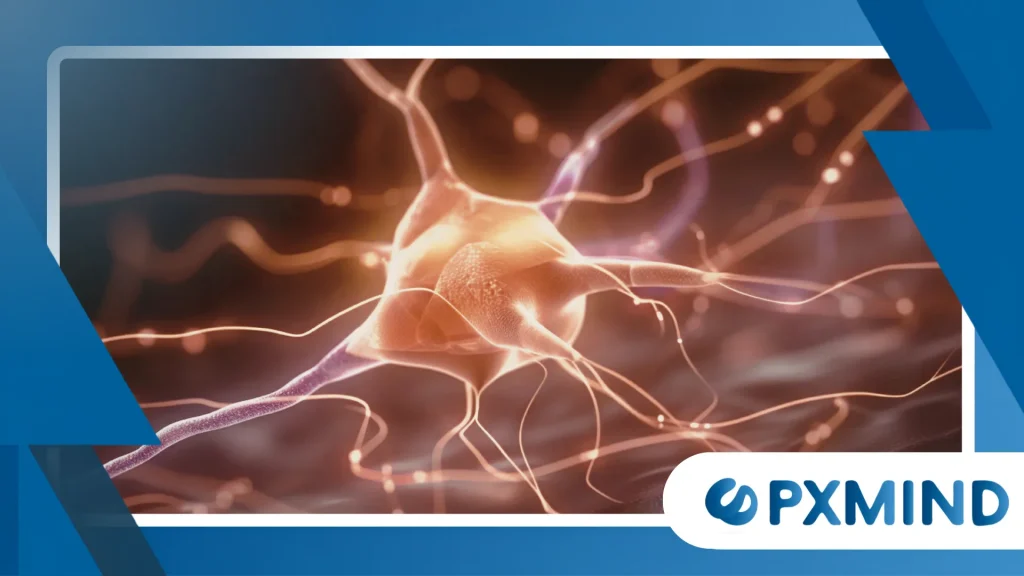
Conclusión
Neural Reuse Theory fundamentally transforms our understanding of cognitive biology completely today.
Evolution achieved remarkable complexity through ruthless efficiency rather than endless physical skull expansion.
Your brain recycles ancient hardware to process modern digital environments effortlessly seamlessly.
Embracing this perspective helps medical professionals develop superior strategies for cognitive rehabilitation therapies.
We must discard the misconception of strictly localized individual anatomical brain functions.
Future breakthroughs depend heavily on analyzing the entire interconnected biological processing network effectively.
Continued research will undoubtedly reveal further mysteries regarding human neuroplasticity capability limits.
Explore the National Institute of Neurological Disorders and Stroke for continuous scientific updates.
Preguntas frecuentes
What is the difference between this concept and simple traditional neuroplasticity?
Neuroplasticity refers broadly to the brain changing its physical structure generally over time.
Neural Reuse Theory specifically explains how established structures gain completely new evolutionary functions.
Can anyone consciously train their brain to repurpose specific targeted regions?
Extensive practice definitely shapes functional connectivity networks over extended long time periods.
However, biological constraints dictate which specific regions can realistically adopt particular new responsibilities.
Is the original cognitive function entirely lost when a region successfully adapts?
Biological hardware typically maintains its ancestral duties alongside modern acquired cognitive applications.
Your visual cortex continues recognizing faces while simultaneously processing complex written alphabet characters.
++ Neural reuse and the nature of evolutionary constraints
++ Neural reuse: A fundamental organizational principle of the brain