
Epistemic Emotions: How They Can Change the Way You Learn
Understanding epistemic emotions—the feelings directly tied to processing information, resolving knowledge gaps, and gaining insight—can fundamentally change how you acquire new skills, retain complex material, and approach lifelong learning.
Anúncios
Instead of treating confusion or surprise as obstacles, you can leverage them as biological cues that prime your brain for deep learning.
When you hit a wall while trying to master a complex skill, what do you actually feel? Most people label that moment as pure frustration or boredom.
Cognitive scientists, however, identify this inner state as a vital signal: an epistemic emotion.
Key Takeaways
- Definition: Epistemic emotions stem from your perception of knowledge and cognitive processing.
- Core Drivers: Surprise, curiosity, confusion, and awe directly influence neuroplasticity and information retention.
- Practical Shift: Reframing confusion as cognitive calibration transforms frustration into active problem-solving.
- Real-World Application: Targeted learning strategies turn passive study habits into engaging cognitive breakthroughs.
What Are Epistemic Emotions?
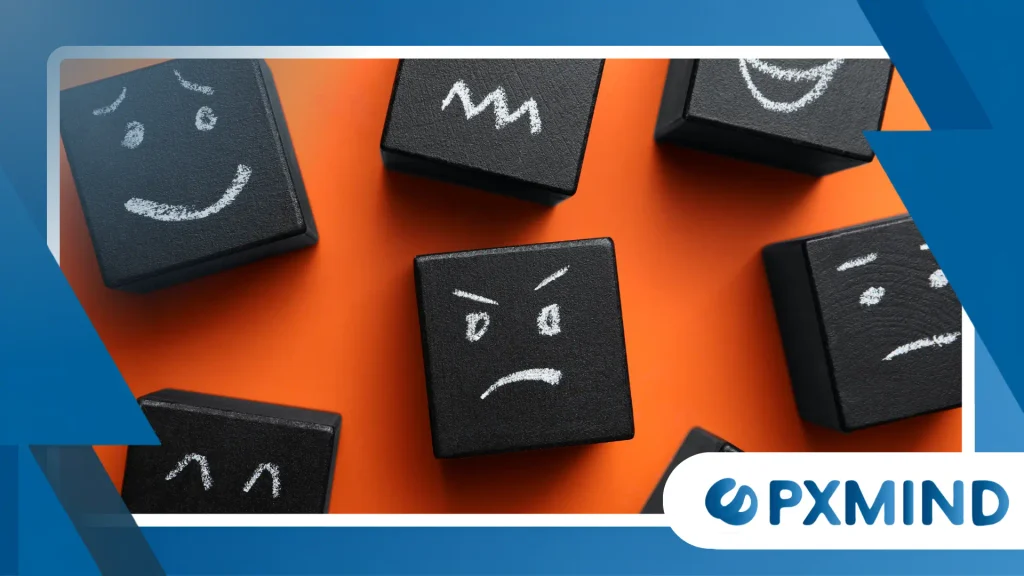
Epistemic emotions are affective states generated by the cognitive appraisal of knowledge, ideas, and intellectual challenge.
Unlike achievement emotions—which center on success or failure (such as pride or anxiety over a grade)—epistemic emotions arise specifically during the process of knowing, understanding, and sense-making.
Psychologists divide these states into positive and negative valence categories based on how they feel, though both types drive intellectual growth.
Curiosity prompts exploration when an information gap appears. Confusion surfaces when incoming information contradicts existing mental models.
Surprise triggers immediate attention reorientation when an outcome violates an expectation.
When you encounter a contradiction, your brain registers a discrepancy between what you expect and what you observe.
That momentary discomfort forces your cognitive framework to adapt, making learning a dynamic, emotionally driven process rather than a static visual recording.
Why Do Epistemic Emotions Matter for Learning?
Traditional education often treats learning as a purely logical exercise. Modern cognitive psychology demonstrates that emotion and cognition operate in a continuous feedback loop.
Epistemic emotions determine how deeply you encode, organize, and retrieve information.
When curiosity kicks in, your brain releases dopamine, enhancing focus and reinforcing memory formation in the hippocampus.
Surprise acts as an immediate cognitive reset, clearing working memory to process novel data.
Without these emotional catalysts, studying degenerates into passive repetition—a low-efficiency strategy that yields rapid forgetting.
++ Why Pretesting Can Improve Learning Before You Study
Research published by the National Center for Biotechnology Information (NCBI) highlights that learners who recognize and harness confusion consistently outperform those who avoid intellectual friction.
Experiencing cognitive dissonance forces deeper processing, leading to stronger schema construction and long-term retention.
How Do Specific Epistemic Emotions Impact Cognitive Performance?
Different epistemic emotions trigger distinct cognitive behaviors and learning outcomes. Recognizing these states allows you to adjust your learning strategy in real time.
Read more: The Science Behind Context Reinstatement for Better Recall
| Epistemic Emotion | Cognitive Trigger | Direct Impact on Learning | Strategic Response |
| Curiosity | Information gap or novel cue | Increases motivation, exploratory behavior, and dopamine flow | Seek immediate context; ask targeted questions |
| Surprise | Expectation violation | Re-orients focus; clears working memory for rapid updates | Re-evaluate assumptions; update mental models |
| Confusion | Cognitive dissonance or complex input | Signals schema mismatch; prompts deep analytical processing | Pause, break down variables, map out concepts |
| Awe | Exposure to vast or profound ideas | Expands cognitive capacity; encourages holistic thinking | Connect new concepts to macro-level frameworks |
| Frustration | Persistent unresolved confusion | Decreases working memory availability; triggers withdrawal | Step back, shift focus temporarily, reset cognitive load |
How Can You Harness Epistemic Emotions to Learn Faster?
Transforming these natural emotional responses into actionable learning habits requires deliberate practice. You can implement three distinct techniques immediately to boost your learning retention and speed.
++ Why Affordance Management Changes How You Act in Social Settings

1. Reframe Confusion as Cognitive Calibration
Feeling confused usually prompts learners to walk away or switch tasks. Reframe this state as a necessary diagnostic step.
Confusion simply means your current mental model lacks the necessary pathways to process incoming information.
When confusion hits, pause and identify the exact boundary of your understanding. Write down the precise point where the logic breaks down.
2. Engineer Micro-Surprises
Predictable study materials rarely stimulate long-term retention. Inject novelty into your routine by testing yourself before reading new material.
Attempting to solve a problem before learning the underlying formula creates an immediate expectation gap.
When you reveal the correct answer, the resulting micro-surprise locks the solution into your memory far more effectively than passive reading.
3. Cultivate Curiosity Gaps
Rather than trying to digest entire subjects at once, frame topics around compelling questions.
Instead of reading about cellular biology sequentially, ask yourself why specific cells behave unexpectedly under pressure.
Curiosity gaps transform passive information consumption into an active search for resolution.
What Are the Most Common Epistemic Traps and How Do You Avoid Them?
While epistemic emotions act as powerful learning accelerants, mishandling them can derail your progress. The two most common pitfalls are runaway frustration and premature satisfaction.
Unresolved confusion quickly turns into frustration when cognitive load exceeds working memory capacity.
To prevent this transition, break complex information into smaller chunks using structured techniques like explaining concepts aloud in plain terms until you uncover the precise friction point.
Premature satisfaction occurs when a brief flash of understanding creates an illusion of mastery. Learners often confuse familiarity with true comprehension.
Counter this trap by applying active recall and spaced repetition, forcing your brain to retrieve knowledge without external prompts.
To explore additional research on cognitive strategies and human learning mechanics, review educational resources curated by official educational research institutions like the U.S. Department of Education.

Frequently Asked Questions
What is the main difference between epistemic emotions and topic emotions?
Epistemic emotions focus directly on the cognitive process of understanding, processing, and mastering information (e.g., confusion, curiosity).
Topic emotions react to the subject matter itself, such as feeling sadness while reading historical tragedies or feeling excitement about space exploration.
Can confusion actually improve memory retention?
Yes. Mild to moderate confusion signals an expectation mismatch in your brain.
This friction triggers deeper cognitive processing and analytical thinking, forcing your brain to reorganize schemas, which results in stronger long-term memory formation.
How can educators and mentors leverage epistemic emotions in the classroom?
Instructors can introduce cognitive incongruities, thought experiments, or pre-tests before presenting solutions.
Posing challenging, open-ended questions creates curiosity gaps and productive confusion, encouraging students to engage deeply rather than passively absorb facts.
Epistemic emotions are not random distractions during study sessions; they are your brain’s internal navigation system for processing complex information.
By recognizing curiosity, surprise, and confusion as functional tools rather than emotional hurdles, you can transform how you absorb, process, and retain knowledge for life.
++ How do Epistemic Emotions Impact Social Learning?
