
How Emotional Avoidance Cycles Impact Mental Well-Being
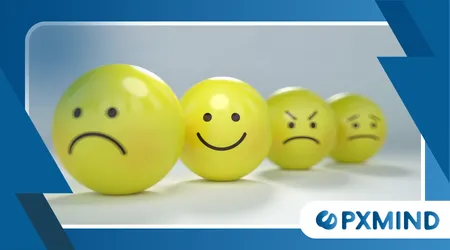
Emotional Avoidance Cycles function as a silent psychological trap. This almost automatic mechanism prompts us to bypass, camouflage, or postpone contact with uncomfortable feelings, under the false assumption that we are protecting ourselves.
Anúncios
The core problem is that dodging these feelings does not dissipate them; it merely shoves them into the subconscious, where they gather strength and begin managing our reactions without our consent.
In a hyper-connected culture packed with instant digital anesthetics, suppression has become the default norm.
However, this apparent peace is an illusion that exacts an incredibly steep price from our psychic structure over the long haul.
Deciphering the engineering behind these patterns is the foundational step toward reclaiming autonomy over your life.
Far from being just a bad habit, chronic avoidance rewrites our relationship with the world, narrowing our horizons and quietly eroding our mental health.
Table of Contents
- The Anatomy of Emotional Avoidance Cycles
- The Feedback Loop of Suppression
- The Silent Erosion of Psychic Resilience
- Healthy Regulation vs. Chronic Avoidance: The Contrast
- Practical Tools to Dismantle the Loop
- Frequently Asked Questions
- Final Reflection
The Anatomy of Emotional Avoidance Cycles
When facing a spike in anxiety, poorly digested grief, or that awkward shame that surfaces after a mistake, the most primitive human reaction is to flinch and retreat.
It is precisely at this inflection point that emotional avoidance cycles spark to life. We are not talking about a strategic mental break here, but rather a systematic refusal to validate one’s own internal reality.
There is something profoundly dysfunctional about treating our emotions as foreign enemies that must be barred at the border of consciousness.
This phenomenon is frequently misinterpreted as self-control or resilience. In reality, clinical psychology points toward experiential avoidance: a process where an individual becomes entirely unable to tolerate the discomfort of their thoughts and bodily sensations.
The immediate relief obtained by changing the channel, opening a new browser tab, or over-focusing on work acts as a perverse positive reinforcement.
The brain learns the wrong lesson, assimilating the dangerous idea that the only way to survive an emotion is to flee from it.
Over time, this escapist behavior creates an existential minefield. You begin avoiding certain people, turning down challenging professional opportunities, and canceling social commitments, all to evade the risk of bumping into a trigger.
Your vital space shrinks, spontaneity vanishes, and daily routine mutates into an exhausting exercise of self-defense against internal ghosts.
The Feedback Loop of Suppression
Fleeing from internal discomfort triggers a predictable and cruel feedback loop within the nervous system.
The moment you successfully distract yourself from a painful memory, your cortisol surge drops, and the brain receives a false sense of security. It is a pyrrhic victory.
This temporary truce is a trap because the neglected affective load does not vanish into thin air; it accumulates on the periphery of your perception.
The cognitive effort required to keep this reservoir intact consumes monumental energy, generating a state of chronic mental exhaustion that individuals can barely explain.
Ironically, the mind enters a state of hypervigilance, constantly scanning the internal horizon to ensure the rejected feeling does not resurface.
Inevitably, the dam bursts. When the suppressed emotion returns, it does not arrive with its original intensity, but rather multiplied by the time it spent confined.
++ How Emotional Dysregulation Patterns Affect Mental Balance
The shock of this abrupt return startles the individual, driving them to resort to even more drastic, numbing escape strategies.
This dangerous escalation solidifies emotional avoidance cycles, transforming normal affective fluctuations into crises that feel completely catastrophic and unmanageable.

The Silent Erosion of Psychic Resilience
Choosing flight over direct confrontation atrophies our psychological musculature. Difficult feelings are, by nature, harsh but indispensable teachers.
It is through the raw experience of moving through sadness, fear, or frustration that an individual discovers, in practice, that these emotional waves possess a natural beginning, middle, and end.
When we operate under the logic of emotional avoidance cycles, we send a continuous distress signal to the amygdala, suggesting we are far too fragile to endure our own biology.
This perpetual false alarm derangesthe autonomic nervous system, leaving the body in a constant state of combat readiness that paves the way for generalized anxiety disorders and depressive episodes.
Consequently, there is a glaring loss in cognitive flexibility. Those who cannot tolerate discomfort become excessively rigid, unequipped to handle the sharp turns and unexpected curveballs of contemporary life.
Read more: Why Ambient Stress Exposure Is Hurting Mental Well-Being
Real self-confidence is not born from the absence of fear, but from the intimate knowledge that fear can be felt, processed, and integrated without dismantling our core integrity.
Healthy Regulation vs. Chronic Avoidance: The Contrast
To visualize how these choices impact the overarching architecture of your mental health, it is worth looking at how different stances shape well-being over time.
| Psychological Metric | Healthy Emotional Regulation | Chronic Emotional Avoidance Cycles |
| Immediate Stress | Elevated (Direct Confrontation) | Low (Temporary Anesthesia) |
| Anxiety Vulnerability | Reduced via Desensitization | Amplified via Accumulation |
| Cognitive Flexibility | High Capacity for Adaptation | Rigidity and Repetitive Patterns |
| Nervous System State | Natural Oscillation & Self-Regulation | Hypervigilance and Burnout |
| Bond Quality | Authentic, Deep Connections | Superficial, Facade-Driven Relations |
Clinical evidence demonstrates that emotional stability achieved through denial is a high-interest loan with predatory rates.
According to data from the National Institutes of Health (.gov), psychological inflexibility resulting from chronic emotional suppression stands as one of the most robust transdiagnostic factors for the development and maintenance of mood disorders in the adult population.
Practical Tools to Dismantle the Loop
Untying the knots of emotional avoidance cycles demands deliberate courage and a heavy dose of patience with your own relapses.
The goal is not complete numbness, but rather expanding your capacity to carry your own discomfort without racing toward the nearest emergency exit.
Mindfulness practices help create a much-needed breathing room between the emergence of a stimulus and the automatic urge to flee.
Instead of fighting desperately against a tight chest, shift your approach: experiment with observing that physical sensation with an almost scientific curiosity, without immediately labeling it an imminent disaster.
Calling things by their actual name—identifying that what you feel is specific frustration rather than generic irritability—strips away a massive portion of the overwhelming power emotions seem to hold when they remain diffuse.
++ The Rise of Closed Loop Neurofeedback for Brain Training
Acceptance and Commitment Therapy (ACT) suggests that making space for these uncomfortable internal states allows you to redirect your energy toward what truly matters, instead of wasting it on an inglorious war against yourself.
Gradual exposure also proves to be a powerful ally: slowly lean into those conversations or scenarios you usually cross off your agenda, proving to your body that discomfort is not synonymous with mortal danger.
Expressive writing acts as an excellent therapeutic laboratory, organizing mental chaos into structured lines that help disarm triggers before they engage the automatic pilot.
Finally, adopt a stance of radical self-compassion; after all, deconstructing defenses you spent years building is a slow, tortuous, and essentially human process.

Frequently Asked Questions
Can avoiding feelings cause real physical pain?
Absolutely. The body is the stage where the unconscious mind stages its unresolved dramas.
Chronic muscle tension, tension headaches, and severe gastrointestinal issues are frequently the direct result of a nervous system overwhelmed by the continuous effort of containing dammed-up emotions.
How do I differentiate legitimate exhaustion from emotional escape?
Legitimate exhaustion calls for restoration and rest, leaving you feeling renewed after a break.
On the flip side, emotional avoidance cycles generate a compulsive urge for distractions that keep the mind occupied or numb, resulting in a chronic sense of dissatisfaction and emptiness even after hours of downtime.
Is it ever healthy to use distraction?
Strategic distraction can serve as a helpful temporary psychological buffer during acute crises, where the emotional pain is simply too intense to be processed immediately.
The real danger cements itself when this provisional survival tactic gets promoted to a lifestyle and becomes your default coping strategy.
How long does it take to reverse this behavioral pattern?
There is no fixed timeline, as we are dealing with neural pathways solidified over the span of years.
Emotional flexibility is built in daily installments; with consistency and growing self-trust, episodes of flight gradually give way to more conscious, integrated responses over several months.
Final Reflection
Persisting in emotional avoidance cycles is equivalent to locking the doors of your house to keep out the wind, only to end up suffocating from the stale, thinning air inside.
The promise of comfort that avoidance offers is a siren song that trades away our vitality, our depth in relationships, and our peace of mind.
True stability does not reside in building an impenetrable mental fortress, but rather in discovering that we are vast enough to house both our inner light and our heaviest storms.
Allowing yourself to feel is the only legitimate path to stop being a hostage to what goes on inside you.
If you realize that these escape patterns are deeply entrenched and sabotaging your quality of life, do not hesitate to seek specialized support.
To find qualified professionals dedicated to developing healthy, scientifically validated coping strategies, consult the clinical database of the Association for Behavioral and Cognitive Therapies (.org).
++ How Avoiding Emotions Effects Mental Wellbeing
++ The Harmful Consequences of Emotional Avoidance
